
The Basic Teachings of the Bible · Study 03
Luther’s Small Catechism
The Christian faith, taught simply. God’s gifts, received daily.
The commandments, the faith we confess, the prayer Jesus taught, and Christ’s gifts for his people.
Begin the study ↓
The complete Small Catechism section from The Basic Teachings of the Bible, pp. 26–60, including the prayers, Table of Duties, and Christian Questions. This is the book’s modernized English edition from the 1921 Concordia Triglotta, with the additions identified in its historical notes.
Read a section at a time, return to its words in daily life, and use the companion questions for reflection or discussion.
READ · LEARN · LIVE
The Ten Commandments
As the head of the family should teach them in a simple way to his household.
The First Commandment
You shall have no other gods.
What does this mean?
We should fear, love, and trust in God above all things.
The Second Commandment
You shall not misuse the name of the Lord your God.
What does this mean?
We should fear and love God so that we do not curse, swear, practice witchcraft, lie, or deceive by his name, but call upon his name in every trouble, pray, praise, and give thanks.
The Third Commandment
Remember the Sabbath day by keeping it holy.
What does this mean?
We should fear and love God so that we do not despise preaching and his Word, but hold it sacred and gladly hear and learn it.
The Fourth Commandment
You shall honor your father and your mother.
What does this mean?
We should fear and love God so that we do not despise or anger our parents and those in authority, but honor, serve, obey, love, and respect them.
The Fifth Commandment
You shall not murder.
What does this mean?
We should fear and love God so that we do not hurt or harm our neighbor in his body, but help and support him in every bodily need and danger.
The Sixth Commandment
You shall not commit adultery.
What does this mean?
We should fear and love God so that we lead a sexually pure and decent life in words and deeds, and husband and wife love and honor each other.
The Seventh Commandment
You shall not steal.
What does this mean?
We should fear and love God so that we do not take our neighbor’s money or property or obtain them by dishonest dealings, but help him improve and protect his property and livelihood.
The Eighth Commandment
You shall not bear false witness against your neighbor.
What does this mean?
We should fear and love God so that we do not deceitfully lie about, betray, slander, or defame our neighbor, but defend him, speak well of him, and put the best construction on everything.
The Ninth Commandment
You shall not covet your neighbor’s house.
What does this mean?
We should fear and love God so that we do not scheme to get our neighbor’s inheritance or house, or obtain it under a pretense of legal right, but help and serve him in keeping it.
The Tenth Commandment
You shall not covet your neighbor’s wife, servants, cattle, or anything that belongs to him.
What does this mean?
We should fear and love God so that we do not estrange, force, or entice away our neighbor’s spouse, workers, or animals, but urge them to stay and faithfully do their duty.
The Conclusion
What does God say about all these commandments?
He says: Do not bow down to them or be subservient to them, for I the Lord your God am a jealous God. I follow up on the guilt of the fathers with their children, their grandchildren, and their great-grandchildren, if they also hate me. But I show mercy to thousands who love me and keep my commandments. (Exodus 20:5-6)
What does this mean?
God threatens to punish all who transgress these commandments. Therefore we should fear his wrath and not act contrary to them. But he promises grace and every blessing to all who keep these commandments. Therefore we should also love and trust in him and gladly do according to his commandments.
Reflect and discuss
Which commandment helps you recognize a need for repentance today? How does its explanation call you to serve your neighbor?
READ · LEARN · LIVE
The Creed
As the head of the family should teach it in a simple way to his household.
The First Article: Creation
I believe in God the Father Almighty, Maker of heaven and earth.
What does this mean?
I believe that God has made me and all creatures; that he has given me my body and soul, eyes, ears, and all my members, my reason and all my senses, and still preserves them. He also gives me clothing and shoes, food and drink, house and home, spouse and children, land, animals, and all my goods.
He richly and daily provides me with everything I need to support this body and life, protects me from all danger, and guards and preserves me from all evil. He does all this out of pure, fatherly, divine goodness and mercy, without any merit or worthiness in me. For all this I owe it to him to thank, praise, serve, and obey him. This is most certainly true.
The Second Article: Redemption
And in Jesus Christ, his only Son, our Lord; who was conceived by the Holy Spirit, born of the virgin Mary; suffered under Pontius Pilate, was crucified, died, and was buried. He descended into hell. The third day he rose again from the dead. He ascended into heaven and sits at the right hand of God the Father Almighty. From there he will come to judge the living and the dead.
What does this mean?
I believe that Jesus Christ, true God, begotten of the Father from eternity, and also true man, born of the virgin Mary, is my Lord.
He has redeemed me, a lost and condemned creature, purchased and won me from all sins, from death, and from the power of the devil—not with gold or silver, but with his holy, precious blood and with his innocent suffering and death—so that I may be his own, live under him in his kingdom, and serve him in everlasting righteousness, innocence, and blessedness, just as he is risen from the dead, lives, and reigns to all eternity. This is most certainly true.
The Third Article: Sanctification
I believe in the Holy Spirit; the holy Christian Church, the communion of saints; the forgiveness of sins; the resurrection of the body; and the life everlasting. Amen.
What does this mean?
I believe that I cannot by my own reason or strength believe in Jesus Christ, my Lord, or come to him. But the Holy Spirit has called me by the Gospel, enlightened me with his gifts, sanctified me, and kept me in the true faith.
In the same way he calls, gathers, enlightens, and sanctifies the whole Christian Church on earth and keeps it with Jesus Christ in the one true faith. In this Christian Church he daily and richly forgives all sins to me and all believers. On the Last Day he will raise me and all the dead and give eternal life to me and all believers in Christ. This is most certainly true.
Reflect and discuss
What gifts do you confess receiving from the Father, the Son, and the Holy Spirit? What comfort is there in the words “for me”?
READ · LEARN · LIVE
The Lord’s Prayer
As the head of the family should teach it in a simple way to his household.
The Introduction
Our Father who is in heaven.
What does this mean?
God tenderly invites us to believe that he is our true Father and that we are his true children, so that we may ask him confidently and with full assurance, as dear children ask their dear father.
The First Petition
Hallowed be your name.
What does this mean?
God’s name is indeed holy in itself, but we pray in this petition that it may be holy among us also.
How is this done?
When the Word of God is taught in its truth and purity and we, as the children of God, also lead holy lives according to it. Help us to do this, dear Father in heaven. But anyone who teaches or lives otherwise than God’s Word teaches dishonors the name of God among us. Preserve us from this, heavenly Father.
The Second Petition
Your kingdom come.
What does this mean?
The kingdom of God certainly comes by itself without our prayer, but we pray in this petition that it may come to us also.
How is this done?
When our heavenly Father gives us his Holy Spirit, so that by his grace we believe his holy Word and lead a godly life here in time and there in eternity.
The Third Petition
Your will be done on earth as it is in heaven.
What does this mean?
The good and gracious will of God is certainly done without our prayer, but we pray in this petition that it may be done among us also.
How is this done?
When God breaks and hinders every evil plan and will that would not let us hallow God’s name or let his kingdom come —such as the will of the devil, the world, and our flesh—but strengthens and keeps us steadfast in his Word and in faith until our end. This is his gracious and good will.
The Fourth Petition
Give us this day our daily bread.
What does this mean?
God gives daily bread even without our prayer to all people, even the wicked, but we pray in this petition that he would lead us to recognize this and receive our daily bread with thanksgiving.
What is meant by daily bread?
Everything that belongs to the support and needs of the body, such as food, drink, clothing, shoes, house, home, land, animals, money, goods, a faithful spouse, faithful children, faithful workers, faithful rulers, good government, good weather, peace, health, self-control, honor, good friends, faithful neighbors, and the like.
The Fifth Petition
Forgive us our trespasses, as we forgive those who trespass against us.
What does this mean?
We pray in this petition that our Father in heaven would not look upon our sins or deny our prayers because of them. We are worthy of none of the things for which we pray, nor have we deserved them. But we ask that he would grant them all to us by grace, for we daily sin much and deserve nothing but punishment. So we also will sincerely forgive and gladly do good to those who sin against us.
The Sixth Petition
Lead us not into temptation.
What does this mean?
God certainly tempts no one, but we pray in this petition that God would guard and keep us so that the devil, the world, and our flesh may not deceive or seduce us into unbelief, despair, and other great shame and vice; and though we are attacked by them, that we may finally overcome and gain the victory.
The Seventh Petition
But deliver us from evil.
What does this mean?
We pray in this petition, as in a summary, that our Father in heaven would deliver us from every kind of evil of body and soul, property and honor; and at last, when our final hour comes, grant us a blessed end and graciously take us from this valley of tears to himself in heaven.
Conclusion
For the kingdom, the power, and the glory are yours now and forever. Amen.
What does this mean?
I should be certain that these petitions are acceptable to our Father in heaven and are heard, for he himself has commanded us to pray this way and has promised that he will hear us. Amen, amen—that is: Yes, yes, it shall be so.
Reflect and discuss
Which petition especially speaks to your needs today? How does calling God “our Father” shape the way you pray?
READ · LEARN · LIVE
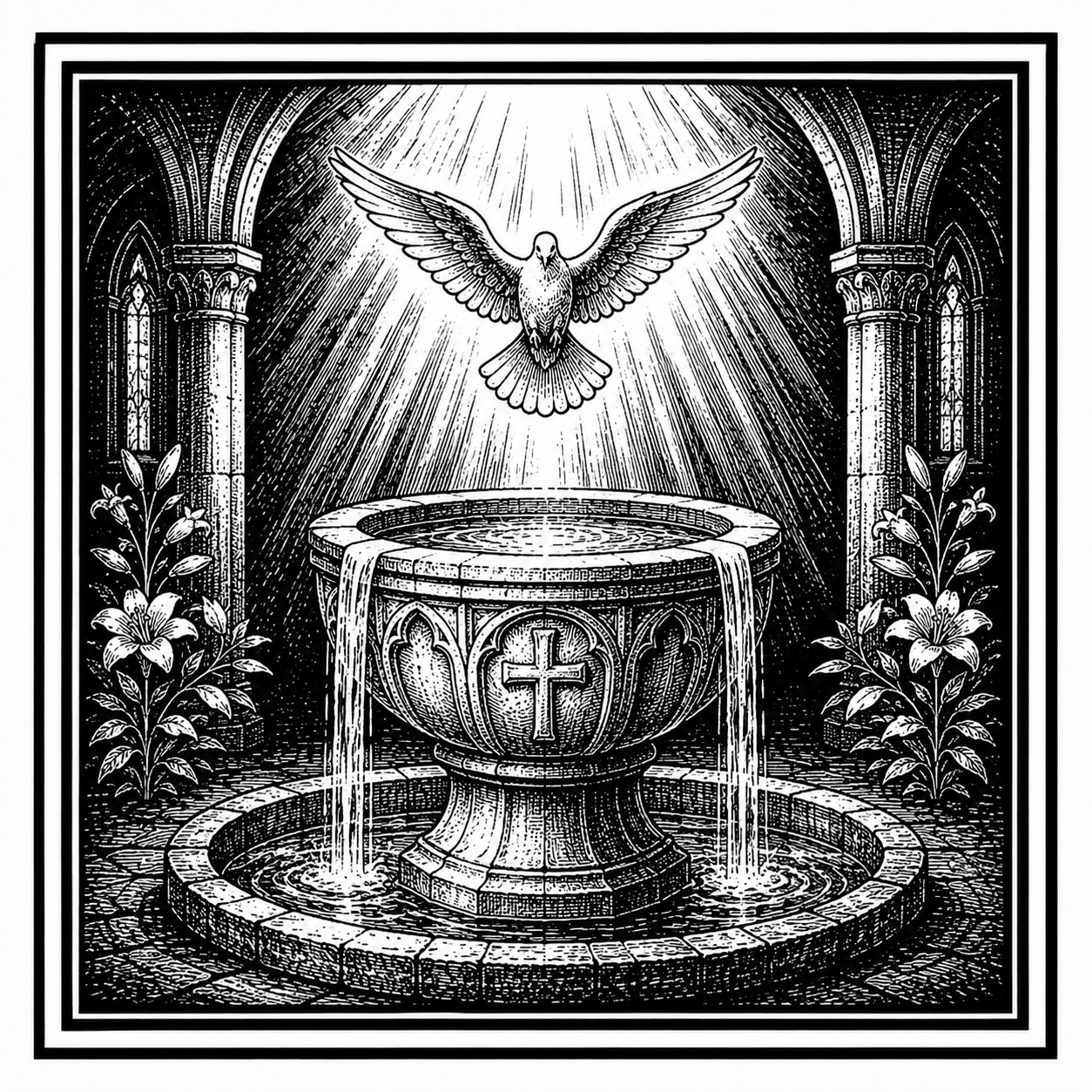
The Sacrament of Holy Baptism
As the head of the family should teach it in a simple way to his household.
First
What is Baptism?
Baptism is not simply water, but it is the water included in God’s command and connected with God’s Word.
Which is that Word of God?
Christ our Lord says in the last chapter of Matthew: “Therefore go and gather disciples from all nations by baptizing them in the name of the Father and of the Son and of the Holy Spirit,” (Matthew 28:19)
Second
What does Baptism give or benefit?
It works forgiveness of sins, delivers from death and the devil, and gives eternal salvation to all who believe this, as the words and promises of God declare.
Which are these words and promises of God?
Christ our Lord says in the last chapter of Mark: “Whoever believes and is baptized will be saved, but whoever does not believe will be condemned.” (Mark 16:16)
Third
How can water do such great things?
It is certainly not the water that does them, but the Word of God that is in and with the water, and faith, which trusts this Word of God in the water. Without the Word of God, the water is simply water and no Baptism. But with the Word of God, it is a Baptism—a gracious water of life and a washing of regeneration in the Holy Spirit.
Where is this written?
St. Paul says in Titus chapter 3: “He saved us—not by righteous works that we did ourselves, but because of his mercy. He saved us through the washing of rebirth and the renewal by the Holy Spirit, whom he poured out on us abundantly through Jesus Christ our Savior, so that, having been justified by his grace, we might become heirs in keeping with the hope of eternal life. This saying is trustworthy. And I want you to insist on these things, so that those who believe in God are intent on keeping busy with good works. These things are honorable and useful for the people.”(Titus 3:5-8)
Fourth
What does such baptizing with water signify?
It signifies that the old Adam in us should, by daily sorrow over sin and repentance, be drowned and die with all sins and evil desires, and that a new person should daily emerge and arise to live before God in righteousness and purity forever.
Where is this written?
St. Paul says in Romans chapter 6: “We were therefore buried with him by this baptism into his death, so that just as he was raised from the dead through the glory of the Father, we too would also walk in a new life.” (Romans 6:4)
Reflect and discuss
What makes Baptism more than ordinary water? How does its promise shape daily repentance and new life?
READ · LEARN · LIVE
Confession
Following the 1921 Concordia Triglotta, the Confession text below gives Luther’s form for teaching Christians to confess. The Office of the Keys section that follows is not part of the Small Catechism text in the Triglotta. It is included from the later Lutheran catechetical tradition and has been rendered here in contemporary English.
What is Confession?
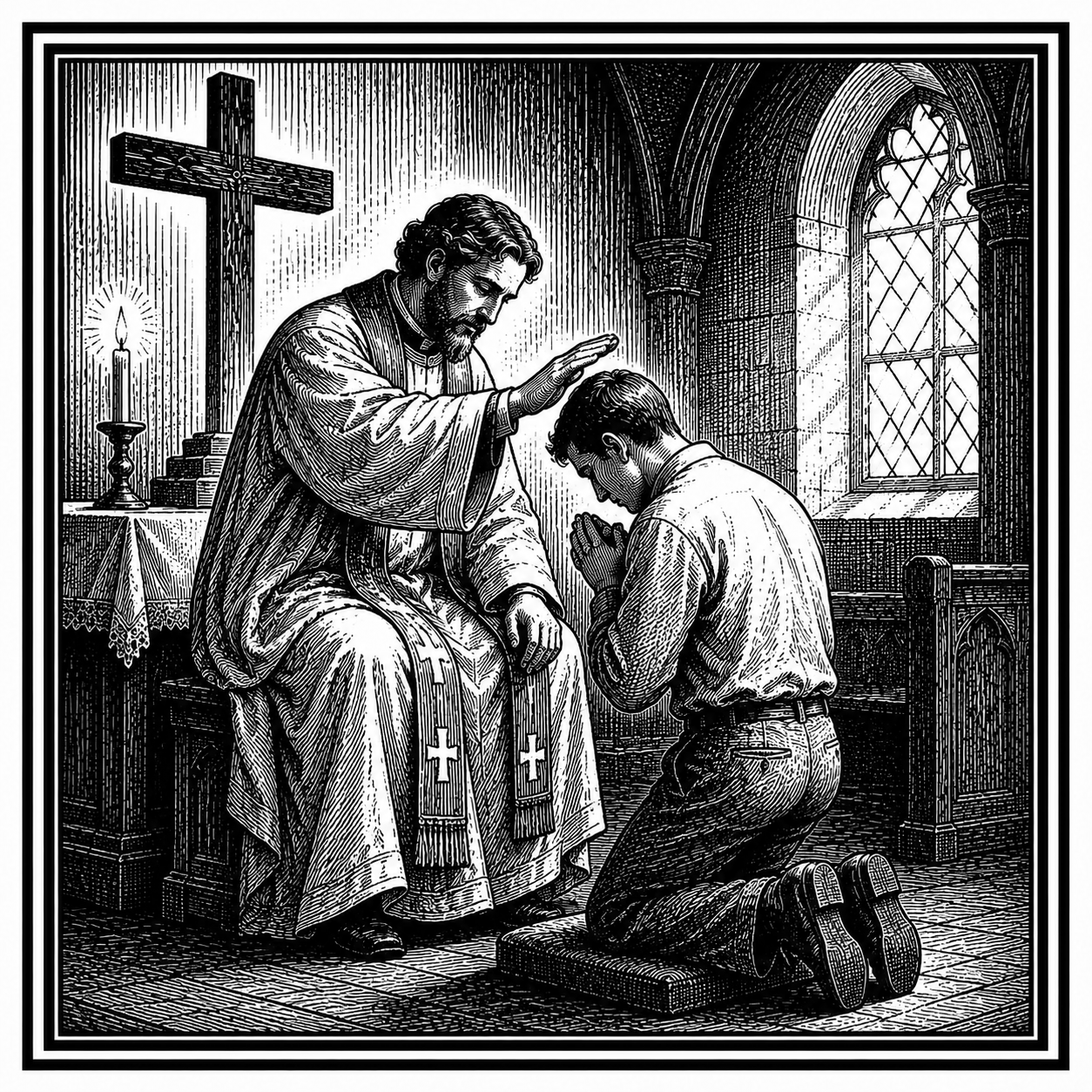
Confession embraces two parts. The first is that we confess our sins. The second is that we receive absolution, or forgiveness, from the confessor as from God himself and do not doubt, but firmly believe, that our sins are thereby forgiven before God in heaven.
What sins should we confess?
Before God we should plead guilty of all sins, even those we do not know, as we do in the Lord’s Prayer. But before the confessor we should confess only those sins that we know and feel in our hearts.
Which are these?
Consider your calling and station according to the Ten Commandments. Are you a father, mother, son, daughter, employer, employee, or servant? Have you been disobedient, unfaithful, or lazy? Have you hurt anyone by words or deeds? Have you stolen, neglected, wasted, or damaged anything, or done some other injury?
A Brief Form of Confession
You may say to the confessor: “Reverend and dear sir, I ask you to hear my confession and pronounce forgiveness to me for God’s sake.”
The confessor may say: “Proceed.”
Then confess: “I, a poor sinner, confess before God that I am guilty of all sins. In particular I confess before you that I have been unfaithful in my calling. I have not done what I was commanded to do; I have provoked others, been negligent, permitted harm to be done, and sinned in words and deeds. For all this I am sorry and ask for grace. I want to do better.”
A father, mother, employer, or other person should likewise confess the particular ways he or she has failed in the duties God has given: neglecting family, giving a bad example, harming a neighbor, speaking evil, dealing dishonestly, or whatever else has been done against God’s command and one’s calling.
If someone is not burdened by these or greater sins, he should not torture himself by searching for or inventing other sins. Let him mention one or two sins that he knows. If he knows of none in particular, he may simply make the general confession and receive forgiveness.
Then the confessor may say: “God be merciful to you and strengthen your faith. Amen.”
Then: “Do you believe that my forgiveness is God’s forgiveness?” The penitent answers: “Yes, dear sir.”
Then let the confessor say: “As you believe, so let it be done for you. By the command of our Lord Jesus Christ I forgive you your sins, in the name of the Father and of the Son and of the Holy Spirit. Amen. Depart in peace.”
Those who have great burdens on their consciences, or are distressed and tempted, should be comforted and encouraged to faith with additional passages of Scripture. This is a general form of confession for ordinary Christians.
Reflect and discuss
Why does the Catechism place receiving absolution alongside confessing our sins? What makes forgiveness certain?
READ · LEARN · LIVE
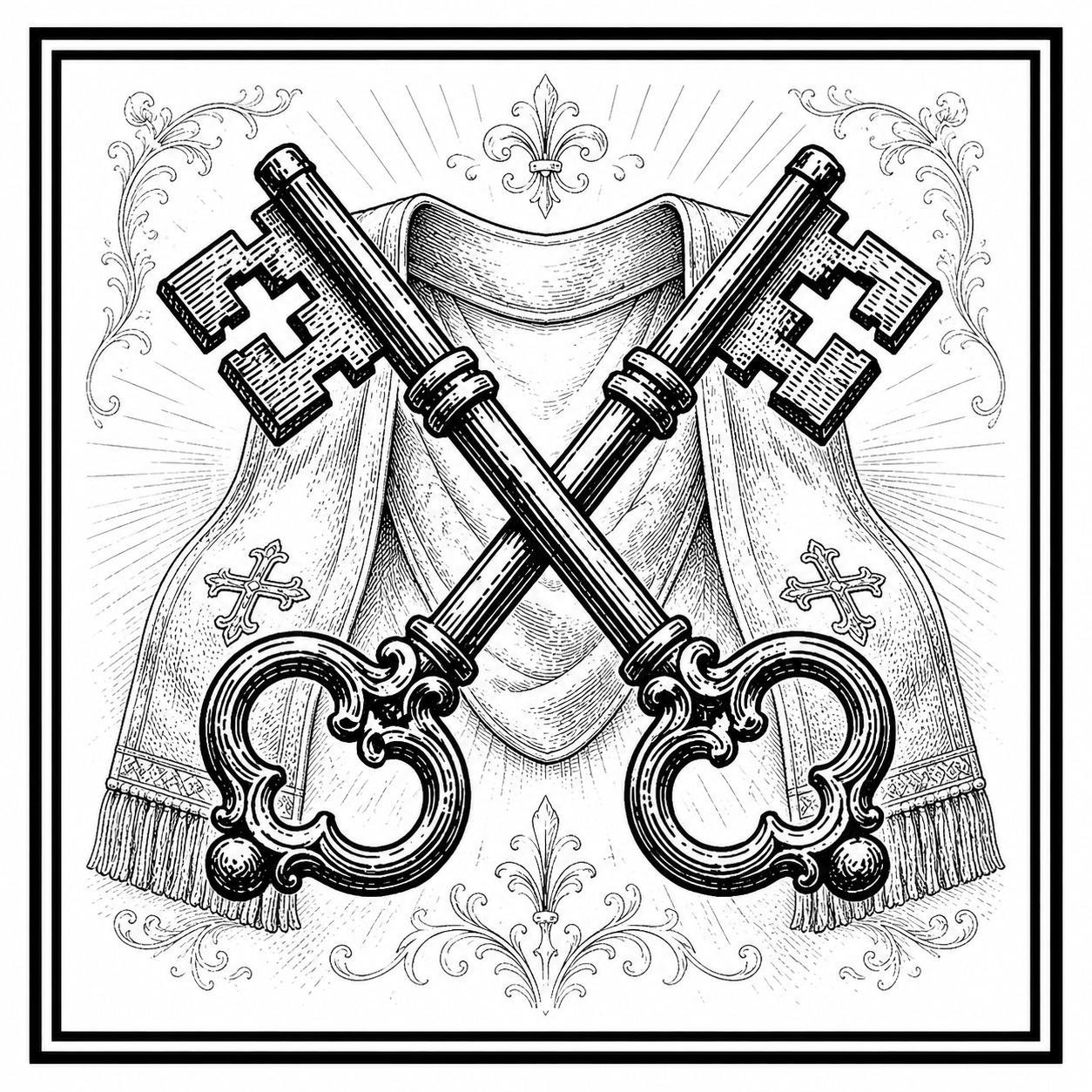
The Office of the Keys
What is the Office of the Keys?
The Office of the Keys is the special authority Christ has given to his Church on earth to forgive the sins of repentant sinners, but to withhold forgiveness from those who do not repent as long as they remain unrepentant.
Where is this written?
St. John the Evangelist writes in chapter 20: After saying this, he breathed on them and said, “Receive the Holy Spirit. Whenever you forgive people’s sins, they are forgiven. Whenever you do not forgive them, they are not forgiven.” (John 20:22-23)
What do you believe according to these words?
I believe that when the called ministers of Christ deal with us according to his divine command—especially when they exclude openly unrepentant sinners from the Christian congregation and absolve those who repent of their sins and desire to amend their lives—this is just as valid and certain, even in heaven, as if Christ our dear Lord dealt with us himself.
Historical Note: This form of the Office of the Keys is not included in the 1529 Small Catechism as contained in the Book of Concord. It reflects Luther’s teaching and became a familiar part of later Lutheran catechism editions. The wording here has been rendered in contemporary English from the public-domain Lutheran catechetical tradition.
Reflect and discuss
Whose promise gives the Church’s absolution its authority? How does the historical note help distinguish this section’s origin?
READ · LEARN · LIVE
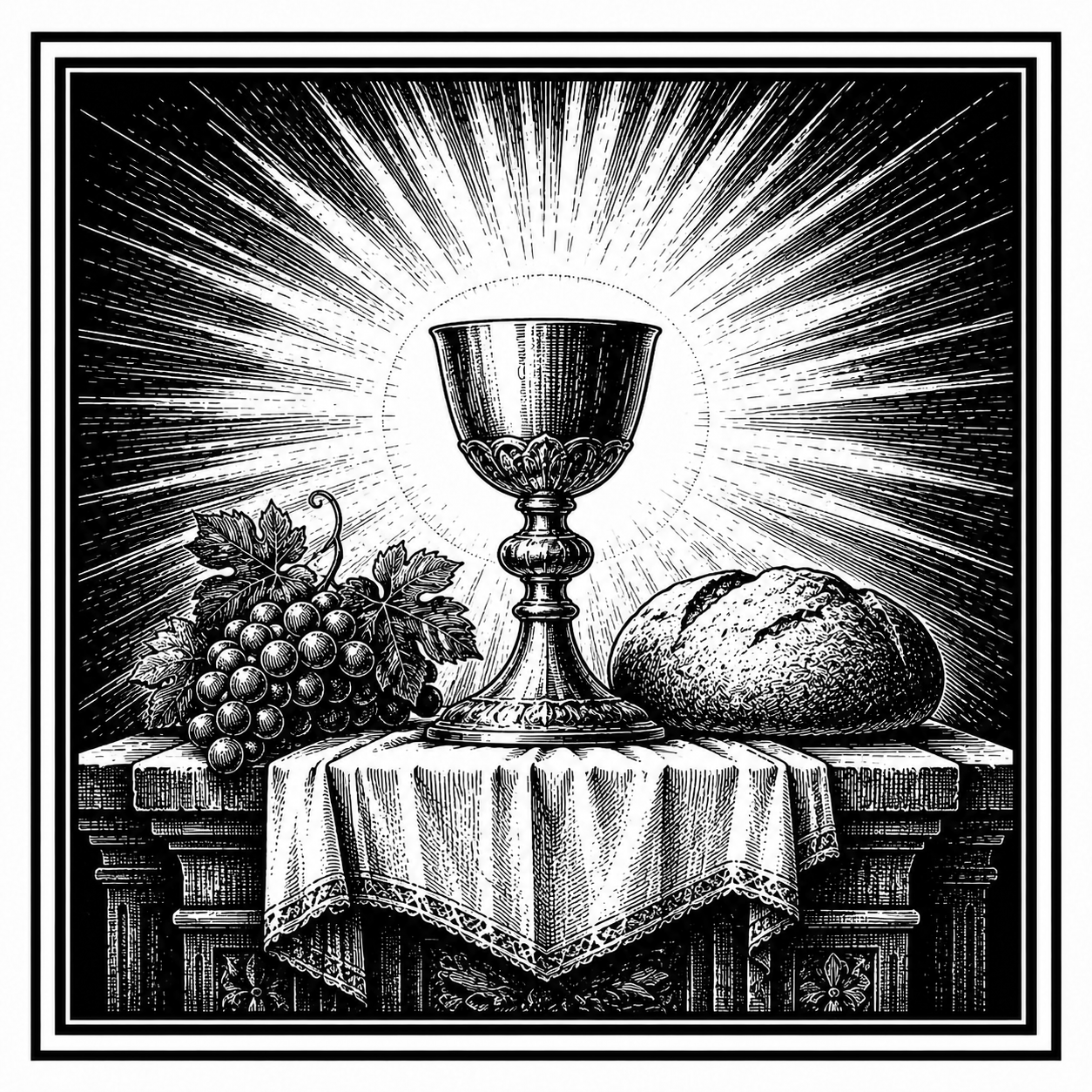
The Sacrament of the Altar
As the head of the family should teach it in a simple way to his household.
What is the Sacrament of the Altar?
It is the true body and blood of our Lord Jesus Christ, under the bread and wine, for us Christians to eat and drink, instituted by Christ himself.
Where is this written?
The holy Evangelists Matthew, Mark, Luke, and St. Paul write:
Our Lord Jesus Christ, on the night when he was betrayed, took bread, and when he had given thanks, he broke it and gave it to the disciples, saying, “Take, eat, this is my body, which is given for you. Do this in remembrance of me.”
In the same way, after the supper, he took the cup, gave thanks, and gave it to them, saying, “Drink from it, all of you, for this is my blood of the New Testament, which is poured out for many for the forgiveness of sins. Do this, as often as you drink it, in remembrance of me.”
What is the benefit of such eating and drinking?
That is shown us in these words: Given and shed for you for the forgiveness of sins. Through these words, forgiveness of sins, life, and salvation are given us in the Sacrament. For where there is forgiveness of sins, there is also life and salvation.
How can bodily eating and drinking do such great things?
It is not the eating and drinking that do them, but the words written here: Given and shed for you for the forgiveness of sins. These words, together with the bodily eating and drinking, are the chief thing in the Sacrament. Whoever believes these words has what they say and express, namely, the forgiveness of sins.
Who, then, receives this Sacrament worthily?
Fasting and bodily preparation are certainly fine outward training, but that person is truly worthy and well prepared who has faith in these words: Given and shed for you for the forgiveness of sins. But whoever does not believe these words, or doubts them, is unworthy and unprepared, for the words “for you” require hearts to believe.
Reflect and discuss
What does Christ give in this Sacrament? Why do the words “for you” invite faith and give comfort?
READ · LEARN · LIVE
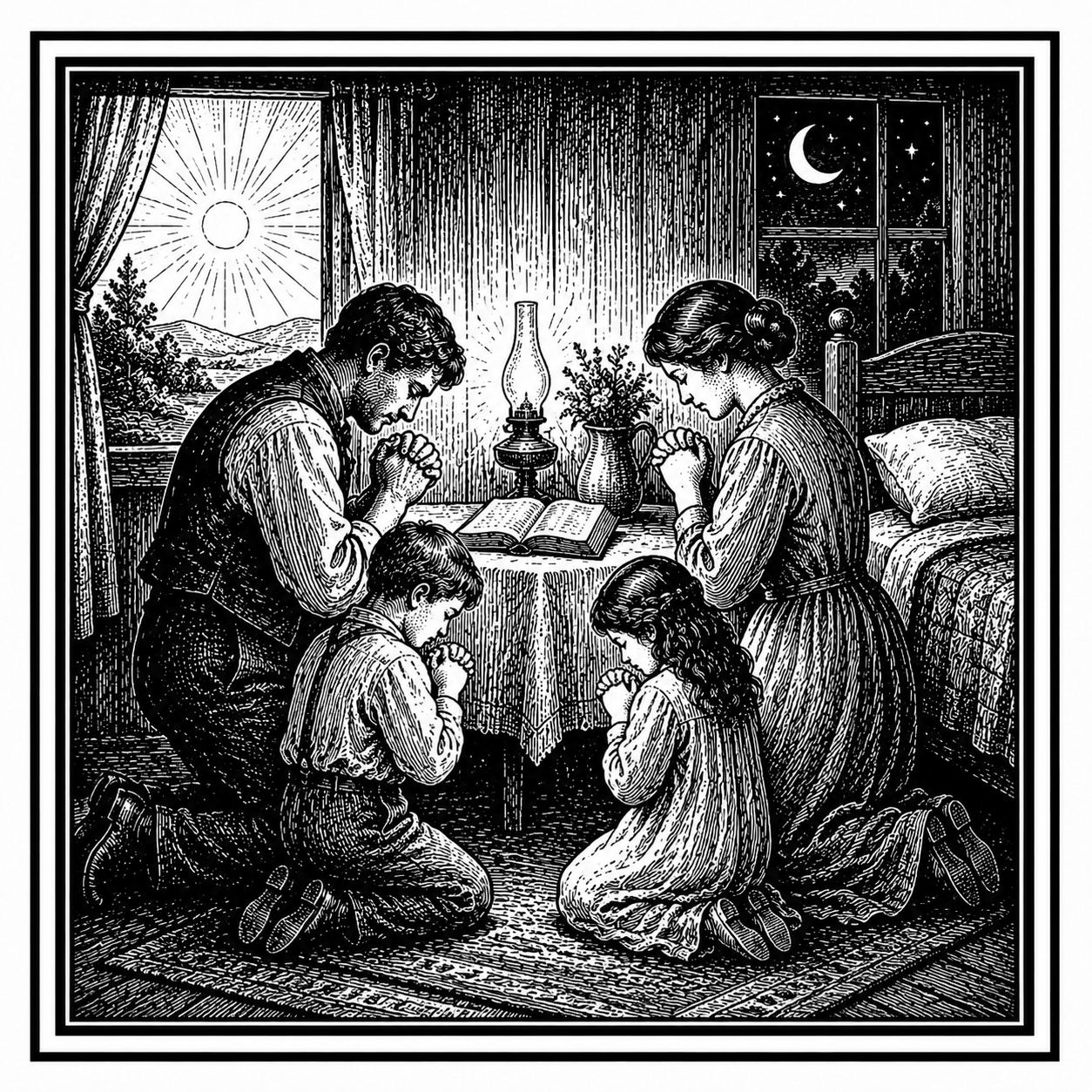
Morning and Evening Prayers
How the head of the family should teach his household to bless themselves in the morning and in the evening.
Morning Prayer
In the morning, when you rise, make the sign of the holy cross and say:
In the name of God the Father, Son, and Holy Spirit. Amen.
Then, kneeling or standing, repeat the Creed and the Lord’s Prayer. If you choose, you may also say this little prayer:
I thank you, my heavenly Father, through Jesus Christ, your dear Son, that you have kept me this night from all harm and danger. I pray that you would keep me this day also from sin and every evil, so that all my actions and life may please you. Into your hands I commend myself, my body and soul, and all things. Let your holy angel be with me, so that the wicked foe may have no power over me. Amen.
Then go joyfully to your work, singing a hymn, such as one on the Ten Commandments, or whatever your devotion may suggest.
Evening Prayer
In the evening, when you go to bed, make the sign of the holy cross and say:
In the name of God the Father, Son, and Holy Spirit. Amen.
Then, kneeling or standing, repeat the Creed and the Lord’s Prayer. If you choose, you may also say this little prayer:
I thank you, my heavenly Father, through Jesus Christ, your dear Son, that you have graciously kept me this day. I pray that you would forgive all my sins where I have done wrong and graciously keep me this night. Into your hands I commend myself, my body and soul, and all things. Let your holy angel be with me, so that the wicked foe may have no power over me. Amen.
Then go to sleep promptly and cheerfully.
Reflect and discuss
How could these prayers help your household begin and end the day in trust rather than anxiety?
READ · LEARN · LIVE
Mealtime Prayers
How the head of the family should teach his household to ask a blessing and return thanks.
Asking a Blessing
The household should come to the table reverently, fold their hands, and say:
The eyes of all look eagerly to you, and you give them their food at the proper time. He opens his hand, and he satisfies the desire of every living thing. Psalm 145:15-16
Then pray the Lord’s Prayer and the following prayer:
Lord God, heavenly Father, bless us and these your gifts, which we receive from your bountiful goodness, through Jesus Christ our Lord. Amen.
Returning Thanks
After the meal they should likewise reverently fold their hands and say:
Give thanks to the Lord, for he is good. For his mercy endures forever. He gives food to all living creatures. He gives food to the cattle and to the young ravens when they call. He is not impressed by the strength of the horse. He is not pleased with the legs of a man. The Lord is pleased with those who fear him, those who wait for his mercy. Psalm 136:1, 25; Psalm 147:9-11
Then pray the Lord’s Prayer and the following prayer:
We thank you, Lord God, heavenly Father, through Jesus Christ our Lord, for all your benefits. You live and reign forever and ever. Amen.
Reflect and discuss
How might asking a blessing and returning thanks change the way you receive ordinary meals?
READ · LEARN · LIVE
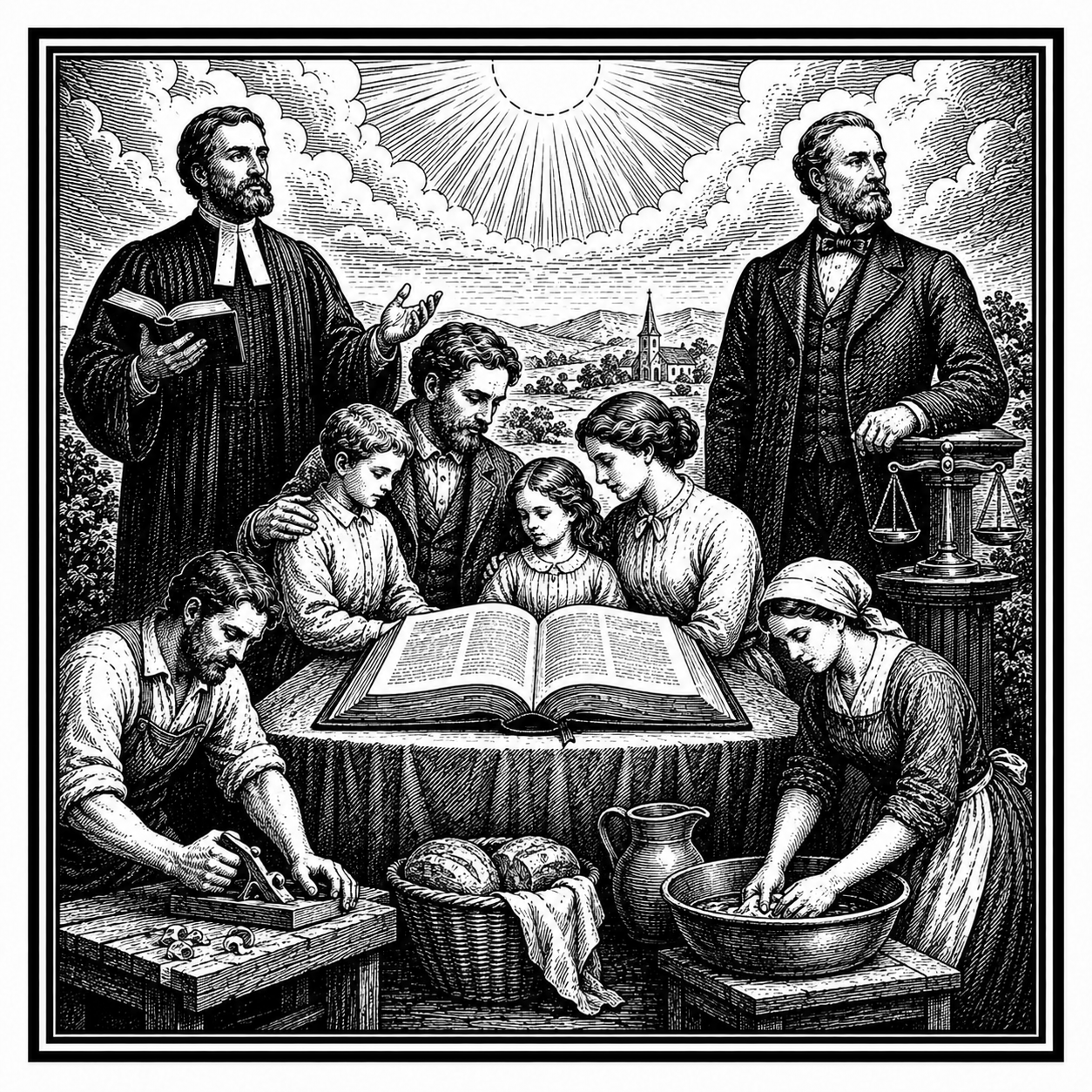
Table of Duties
Certain passages of Scripture for various holy orders and stations, by which Christians are admonished concerning their offices and service.
For Bishops, Pastors, and Preachers
It is necessary, then, for the overseer to be above reproach, the husband of only one wife, temperate, self-controlled, respectable, hospitable, able to teach, not a drunkard, not a violent man but gentle, not quarrelsome, not a lover of money. It is necessary that he manage his own household well, with all dignity making sure that his children obey him. (If a man does not know how to manage his own household, how will he take care of God’s church?) He must not be a recent convert, or he might become conceited and fall into the same condemnation as the Devil. Such a man is to be blameless, the husband of only one wife, and to have believing children who are not open to a charge of wild living or disobedience.
Indeed an overseer, since he is God’s steward, must be blameless, not arrogant, not quick-tempered, not a drunkard, not violent, not eager for dishonest gain. Instead, he must be hospitable, loving what is good, self-controlled, upright, devout, and disciplined. He must cling to the trustworthy message as it has been taught, so that he will be able both to encourage people by the sound teaching and also to correct those who oppose him.
1 Timothy 3:2-6; Titus 1:6-9
What Hearers Owe to Their Pastors
In the same way, the Lord has commanded that those who preach the gospel are to receive their living from the gospel. Let the one who is taught the word share all good things with his teacher. The elders who lead well should be considered worthy of double honor, especially the ones who work hard in the word and doctrine. For Scripture says, “Do not muzzle the ox while it is treading out the grain,” and “The worker is worthy of his pay.” Obey your leaders and submit to them, for they are keeping watch over your souls as men who will give an account. Obey them, so that they may do this with joy and not with groaning, for that would be of no benefit to you.
1 Corinthians 9:14; Galatians 6:6; 1 Timothy 5:17-18; Hebrews 13:17
Concerning Civil Government
Everyone must submit to the governing authorities. For no authority exists except by God, and the authorities that do exist have been established by God. Therefore the one who rebels against the authority is opposing God’s institution, and those who oppose will bring judgment on themselves. For rulers are not a terror to good conduct, but to evil. Would you like to have no fear of the one in authority? Do what is good, and you will receive praise from him, because he is God’s servant for your benefit. But if you do wrong, be afraid, because he does not carry the sword without reason. He is God’s servant, a punisher to bring wrath on the wrongdoer.
Romans 13:1-4
What Subjects Owe to the Government
“Caesar’s,” they replied to him. Then he said to them, “Therefore give to Caesar the things that are Caesar’s, and to God the things that are God’s.” Therefore it is necessary to submit, not only because of wrath, but also because of conscience. For this reason you also pay taxes, because the authorities are God’s ministers, who are employed to do this very thing. Pay what you owe to all of them: taxes to whom taxes are owed, revenue to whom revenue is owed, respect to whom respect is owed, and honor to whom honor is owed. First of all, then, I urge that petitions, prayers, intercessions, and thanksgivings be made for all people, for kings and all those who are in authority, in order that we might live a quiet and peaceful life in all godliness and dignity. Remind them to be subject to rulers and authorities, to obey, to be ready to do any good work, Submit to every human authority because of the Lord, whether to the king as the supreme authority or to governors as those who have been sent by him to punish those who do what is wrong and to praise those who do what is right.
Matthew 22:21; Romans 13:5-7; 1 Timothy 2:1-2; Titus 3:1; 1 Peter 2:13-14
For Husbands
Husbands, in the same way, continue to live with your wives with the knowledge that, as the wife, she is the weaker vessel. Also continue to accord them honor as fellow heirs with you of the gracious gift of life, so that your prayers will not be hindered. Husbands, love your wives and do not treat them harshly.
1 Peter 3:7; Colossians 3:19
For Wives
Wives, submit to your own husbands as to the Lord. just as Sarah obeyed Abraham and called him lord. You are her daughters if you do what is good and do not fear anything that is intimidating.
Ephesians 5:22; 1 Peter 3:6
For Parents
Fathers, do not provoke your children to anger, but bring them up in the training and instruction of the Lord.
Ephesians 6:4
For Children
Children, obey your parents in the Lord, for this is right. “Honor your father and mother,” which is the first commandment with a promise: “that it may go well with you and that you may live a long life on the earth.”
Ephesians 6:1-3
For Servants, Workers, and Laborers
Slaves, obey your human masters with respect and reverence, and with a sincere heart, just as you obey Christ. Do this not just when they are watching, as if merely to please people, but as slaves of Christ, doing the will of God from the heart. Serve with eagerness, as for the Lord and not for people, because you know that each person, whether slave or free, will receive back from the Lord whatever good he has done. Slaves, obey your human masters in everything, not just when they are watching you, like people-pleasers, but with a sincere heart, out of respect for the Lord.
Ephesians 6:5-8; Colossians 3:22
For Masters and Employers
And masters, do the same for your slaves. Do not threaten them, because you know that the one who is both their Master and yours is in heaven, and with him there is no favoritism. Masters, show justice and fairness to your slaves, because you know that you also have a Master in heaven.
Ephesians 6:9; Colossians 4:1
For Young Persons in General
Likewise, young men, be submissive to those who are older. And all of you, clothe yourselves with humility toward one another. For “God opposes the proud, but he gives grace to the humble.” Therefore humble yourselves under God’s powerful hand so that he may lift you up at the appointed time.
1 Peter 5:5-6
For Widows
Now the widow who is without relatives has put her hope in God and continues in her petitions and prayers night and day. But the widow who lives only for her own pleasure is dead, even while she lives.
1 Timothy 5:5-6
For All in Common
Do not owe anyone anything except to love one another, for the one who loves another has fulfilled the law. For the commandments—do not commit adultery, do not murder, do not steal, do not covet (and if there is any other commandment)—are summed up in this statement: “Love your neighbor as yourself.” Love does no harm to a neighbor, so love is the fulfillment of the law.
First of all, then, I urge that petitions, prayers, intercessions, and thanksgivings be made for all people, for kings and all those who are in authority, in order that we might live a quiet and peaceful life in all godliness and dignity.
Romans 13:8-10; 1 Timothy 2:1-2
Let each his lesson learn with care, And all the household well shall fare.
Prayer
Heavenly Father, plant your Word deeply in our hearts and teach us to fear, love, and trust in you above all things. Keep us steadfast in the faith you have given us through your Gospel, strengthen us through your Word and Sacraments, and lead us each day in repentance, forgiveness, prayer, and love for our neighbor. By your Holy Spirit, help us gladly serve you in all the callings you have given us. Through Jesus Christ, our Lord. Amen.
Reflect and discuss
Which of the callings described here are yours? What concrete opportunity do you have to serve someone in that calling?
READ · LEARN · LIVE
Christian Questions with Their Answers
Prepared for those who intend to go to the Sacrament.
These questions were appended to editions of the Small Catechism after Luther’s death and have long been used as a form of self-examination before receiving the Lord’s Supper.
1. Do you believe that you are a sinner?
Yes, I believe it. I am a sinner.
2. How do you know this?
From the Ten Commandments, which I have not kept.
3. Are you sorry for your sins?
Yes, I am sorry that I have sinned against God.
4. What have you deserved from God because of your sins?
His wrath and displeasure, temporal death, and eternal damnation. See Romans 6:21, 23.
5. Do you hope to be saved?
Yes, that is my hope.
6. In whom, then, do you trust?
In my dear Lord Jesus Christ.
7. Who is Christ?
The Son of God, true God and true man.
8. How many Gods are there?
Only one, but there are three persons: Father, Son, and Holy Spirit.
9. What has Christ done for you that you trust in him?
He died for me and shed his blood for me on the cross for the forgiveness of sins.
10. Did the Father also die for you?
No. The Father is God only, as is the Holy Spirit; but the Son is both true God and true man. He died for me and shed his blood for me.
11. How do you know this?
From the holy Gospel, from the words instituting the Sacrament, and from his body and blood given to me as a pledge in the Sacrament.
12. What are the Words of Institution?
Our Lord Jesus Christ, on the night when he was betrayed, took bread, and when he had given thanks, he broke it and gave it to the disciples, saying,
“Take, eat, this is my body, which is given for you. Do this in remembrance of me.” In the same way, after the supper, he took the cup, gave thanks, and gave it to them, saying, “Drink from it, all of you, for this is my blood of the New Testament, which is poured out for many for the forgiveness of sins. Do this, as often as you drink it, in remembrance of me.”
13. Do you believe, then, that the true body and blood of Christ are in the Sacrament?
Yes, I believe it.
14. What convinces you to believe this?
The word of Christ: “Take, eat, this is my body.” “Drink from it, all of you, for this is my blood of the New Testament.”
15. What should we do when we eat his body and drink his blood and in this way receive his pledge?
We should remember and proclaim his death and the shedding of his blood, as he taught us: Do this, as often as you drink it, in remembrance of me.
16. Why should we remember and proclaim his death?
First, so that we may learn to believe that no creature could make satisfaction for our sins; only Christ, true God and true man, could do that. Second, so that we may learn to be horrified by our sins and regard them as very serious. Third, so that we may find joy and comfort in Christ alone and through faith in him be saved.
17. What moved Christ to die and make full payment for your sins?
His great love for his Father and for me and other sinners, as Scripture teaches in John 14, Romans 5, Galatians 2, and Ephesians 5.
18. Finally, why do you wish to go to the Sacrament?
So that I may learn to believe that Christ, out of great love, died for my sin, and also learn from him to love God and my neighbor.
19. What should admonish and encourage a Christian to receive the Sacrament frequently?
First, both the command and the promise of Christ the Lord. Second, our own pressing need, because of which the command, encouragement, and promise are given.
20. But what should you do if you are not aware of this need and have no hunger and thirst for the Sacrament?
No better advice can be given than this: First, touch your body to see whether you still have flesh and blood, and believe what Scripture says about the flesh in Galatians 5 and Romans 7.
Second, look around to see whether you are still in the world, and remember that there will be no lack of sin and trouble, as Scripture says in John 15-16 and 1 John 2 and 5.
Third, remember that the devil is certainly also around you, and with his lying and murdering day and night will give you no peace, within or without, as Scripture pictures him in John 8 and 16, 1 Peter 5, Ephesians 6, and 2 Timothy 2.
Note: These questions and answers are no child’s play. They are intended for both young and old to use with great earnestness. Let each person pay attention and consider this a serious matter, for St. Paul writes in Galatians 6: “Do not be deceived: God cannot be mocked.”
Reflect and discuss
Which question helps you recognize your need for Christ? Which answer especially assures you of his gift?
Read Luther’s preface
Martin Luther to all faithful and godly pastors and preachers: Grace, mercy, and peace in Jesus Christ, our Lord.
The deplorable and miserable condition that I recently discovered while visiting the churches has compelled me to prepare this Catechism, or Christian teaching, in this small, plain, and simple form. Mercy! Good God, what great misery I saw! The common people, especially in the villages, know almost nothing of Christian doctrine, and many pastors are altogether unable and unfit to teach.
Yet all still wish to be called Christians, have been baptized, and receive the holy Sacrament, even though they cannot recite the Lord’s Prayer, the Creed, or the Ten Commandments. They live as though they had no reason, and now that the Gospel has come, they have learned to misuse Christian freedom.
O bishops, what answer will you give Christ for so shamefully neglecting the people and never carrying out your office? You insist on human regulations and ceremonies, yet you show little concern whether the people know the Lord’s Prayer, the Creed, the Ten Commandments, or any part of God’s Word. Woe to such neglect!
Therefore, for God’s sake, I beg all of you who are pastors and preachers: devote yourselves earnestly to your office. Have pity on the people entrusted to you, and help us teach the Catechism to them, especially to the young. Those who cannot do better should take these simple forms and impress them word for word upon the people.
First, the preacher should above all avoid using many different texts and forms of the Ten Commandments, the Lord’s Prayer, the Creed, the Sacraments, and the other chief parts. Choose one form and use it consistently, year after year. Young and simple people must be taught with one settled text, or they will easily become confused when a teacher constantly changes the wording as though making improvements.
Our fathers understood this well, for they used the same form of the Lord’s Prayer, the Creed, and the Ten Commandments. We also should teach these parts to the young and simple without continually changing the wording, no matter how often we teach them.
When preaching to learned and intelligent people, you may explain these teachings in varied and skillful ways. But with young people, keep to one fixed and permanent form. Teach them first the Ten Commandments, the Creed, the Lord’s Prayer, and the other chief parts word for word so that they can repeat them and commit them to memory.
Those who refuse to learn should be told that they are denying Christ and are not living as Christians. They should not be admitted to the Sacrament, serve as sponsors at Baptism, or exercise the privileges of Christian fellowship until they are willing to learn. Parents and those responsible for households should also see that the young learn these basic teachings.
We cannot and should not force anyone to believe. But we should insist that people learn what is right and wrong according to the community in which they live. Whoever wants to live among Christians should know the Christian teaching, even if faith itself cannot be compelled.
Second, after the people have learned the text well, teach them what it means. Again, choose a simple, consistent explanation and keep to it. Take your time. It is not necessary to teach all the parts at once. When they understand the First Commandment, then go on to the Second, and so forth, so that they are not overwhelmed and unable to retain anything well.
Third, after you have taught this Small Catechism, then take up the Large Catechism and give a richer and fuller understanding. Explain each commandment, article, petition, and part, together with its works, uses, benefits, dangers, and harms. Give special attention to those commandments and teachings that are most neglected among your people.
For example, the Seventh Commandment against stealing should be strongly urged among workers, merchants, farmers, and servants, because many forms of dishonesty arise in ordinary work and trade. The Fourth Commandment should likewise be urged among children and ordinary people so that they learn to be faithful, obedient, peaceful, and respectful. Use examples from Scripture to show how God has punished disobedience and blessed faithfulness.
Especially urge parents and civil authorities to govern well and to educate the young. Show them why this is their duty and what serious harm they do when they neglect it. By such neglect they damage both the Church and the civil community. Make clear how necessary it is to train children who may one day serve as pastors, teachers, civil servants, and in other needed callings.
Finally, now that the tyranny of the pope has been removed, many people have become unwilling to receive the Sacrament and treat it as unnecessary. Here we must urge them again, but with this understanding: we are to force no one to believe or to receive the Sacrament, and we are not to set up a human law about a fixed time or place. Instead, we should preach in such a way that people recognize their need and, of their own accord, desire the Sacrament.
Christ did not say, ‘Omit this’ or ‘Despise this,’ but, ‘Do this, as often as you drink it.’ He wants his Sacrament to be used and not neglected. Whoever has no desire for it over a long period should examine whether he has forgotten his sin, his flesh, the devil, the world, death, danger, and judgment – and whether he has forgotten his need for grace, life, Christ, and every good gift of God.
If people truly believe that they are surrounded by so much evil and need so much good, they will not despise the Sacrament by which Christ gives such help and blessing. They will come gladly without being compelled by a human law.
Therefore do not make new laws about the Sacrament. Instead, clearly teach its benefit and blessing, our need and danger, and its proper use. Then people will come of themselves. If they still do not come, let them bear the responsibility, but pastors must not be silent. Look to it, pastors and preachers: our office is serious and saving. It brings labor, danger, and trials, often with little earthly reward or gratitude.
But Christ himself will be our reward if we labor faithfully. May the Father of all grace help us, to whom be praise and thanks forever through Christ our Lord. Amen.