
The Basic Teachings of the Bible · Study 02
The Biblical Story in Six Acts
Creation. Fall. Promise. Christ. Church. New Creation.
One unfolding story of God’s saving love, with Jesus Christ at its center.
Begin the story ↓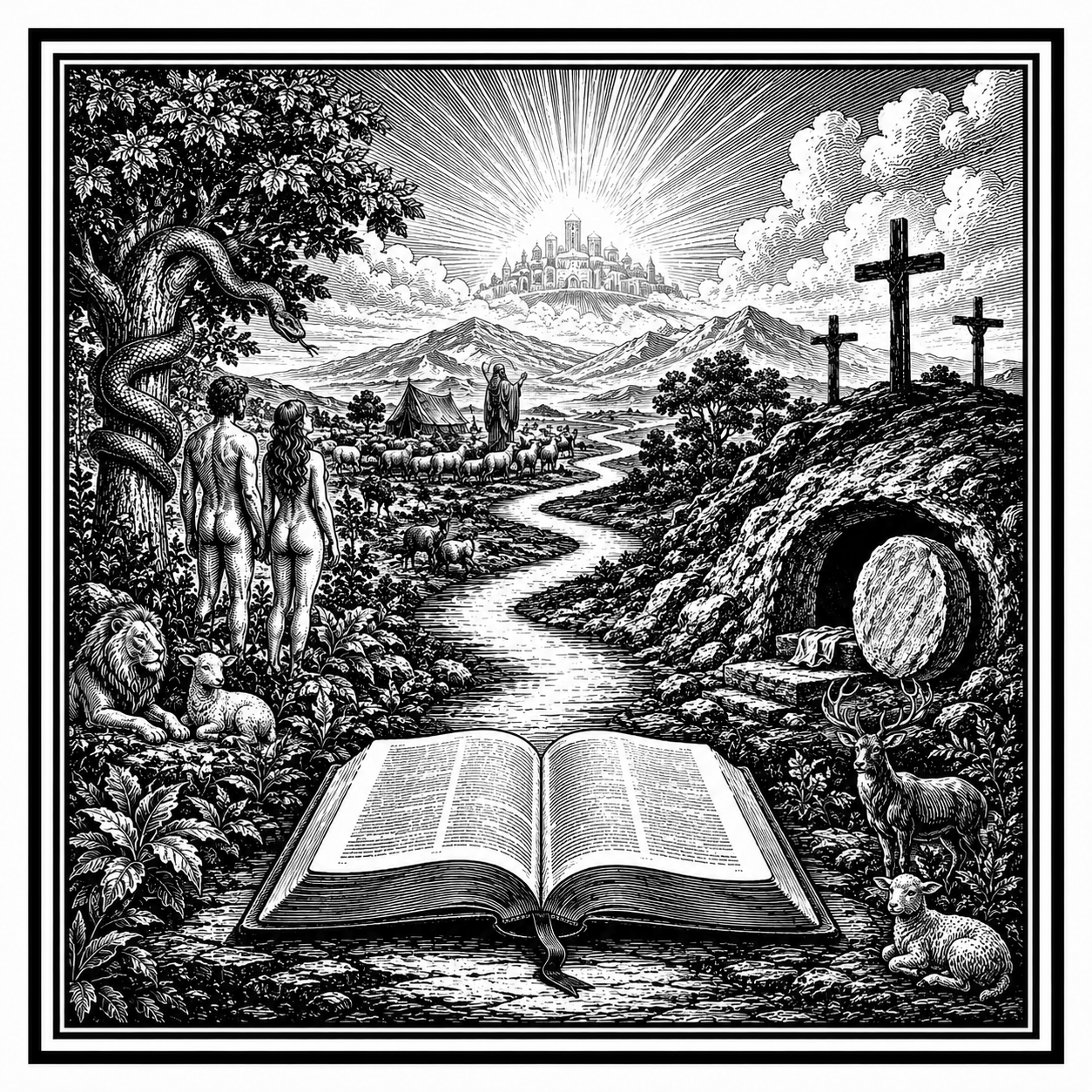
The complete narrative from The Basic Teachings of the Bible, pp. 10–23. The Scripture reading suggestions and discussion questions are companion material added for this online study.
ACT 1 OF 6
God’s Good Creation
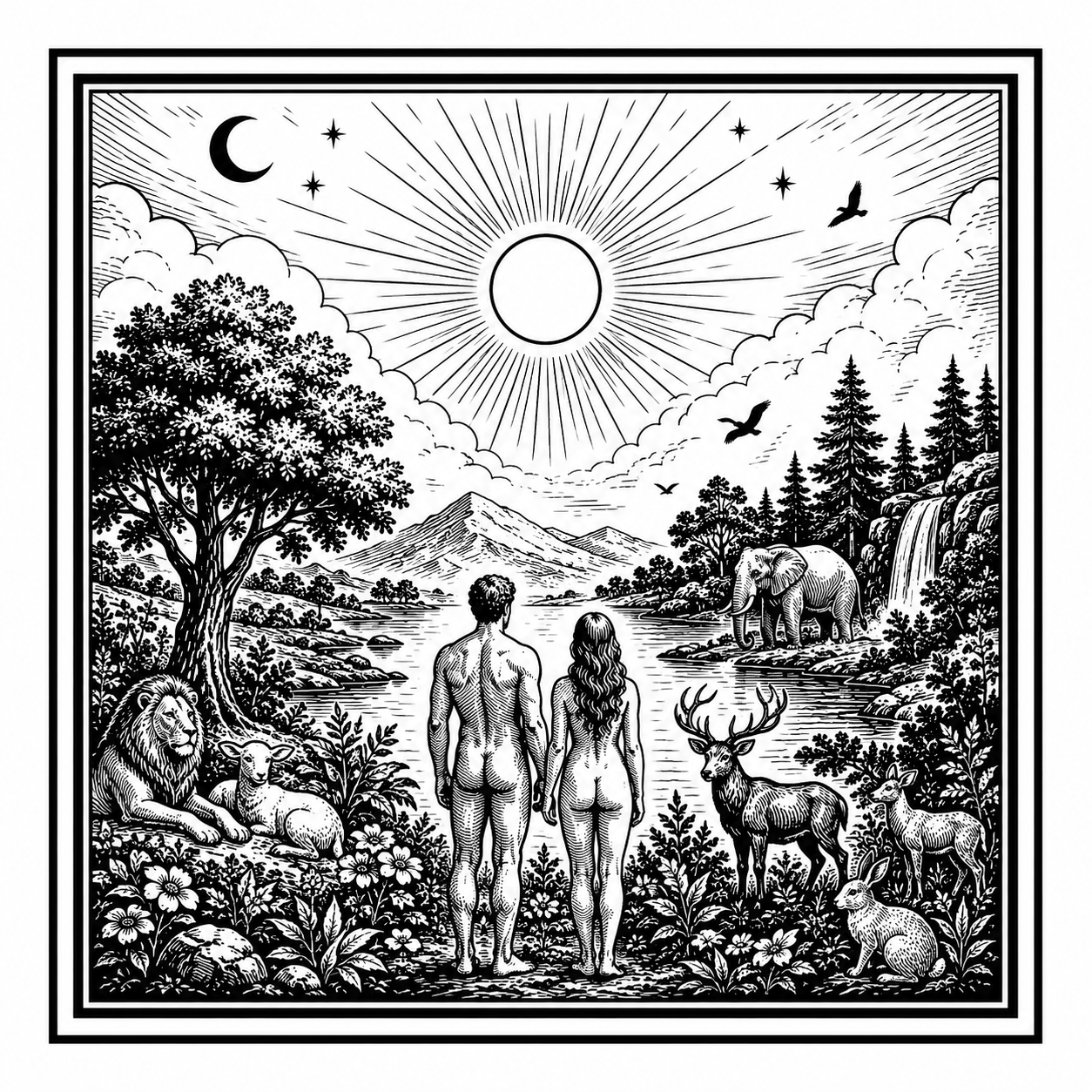
The biblical story begins with God. Before anything else existed, God was there. By his powerful Word he created the heavens and the earth and everything in them. At the center of his creation, God made human beings—Adam and Eve—and placed them in the Garden of Eden.
God created humanity in his own image. Human beings were made to know God, trust him, receive his gifts with thanksgiving, and live in loving fellowship with him. They were also given a calling—a vocation. God entrusted his creation to them so that they would care for it, cultivate it, and exercise loving stewardship over it.
From the beginning, human life was meant to be lived in relationships of love: love for God, love for one another, and responsible care for the world God had made.
Even more remarkable, God desired to dwell with his creatures. Adam and Eve did not need to search for God or find some way to climb up to him. God came to them. He spoke to them, blessed them, and gave them everything they needed for life.
When God looked at all he had made, he declared it very good.
This is where the biblical story begins. Creation is God’s gift. Human life has meaning because we were created by God, in his image, to receive his love and to live as his beloved creatures in his world.
But this beautiful beginning would not remain untouched.
Read and reflect
Read in your Bible: Genesis 1:1–2:3; Genesis 1:26–28; Genesis 2:15–17.
What does being created in God’s image tell you about your worth and your calling to care for others?
ACT 2 OF 6
The Fall and Exile
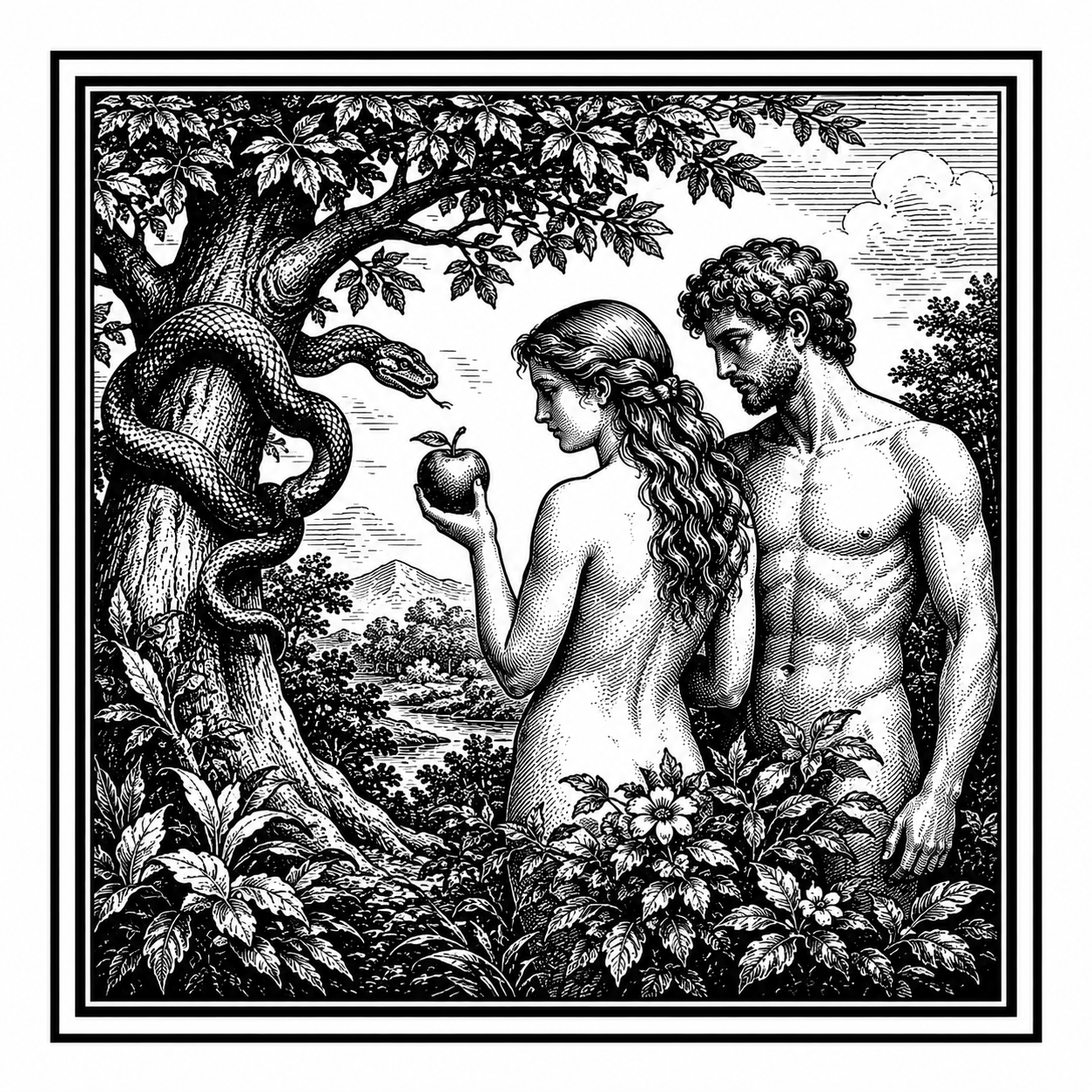
Conflict enters the story when Adam and Eve listen to the voice of the Serpent rather than the Word of God.
Satan tempts them to doubt God’s goodness and trustworthiness. Instead of receiving God’s Word in faith, they seek wisdom and life apart from him. They want to determine good and evil for themselves.
This rebellion against God is what the Bible calls sin.
Sin is more than breaking individual rules. At its root, sin is humanity’s refusal to fear, love, and trust in God above all things. Adam and Eve turn away from the God who gave them life and attempt to live independently of him.
The consequences are devastating.
Their relationship with God is broken. Their relationship with one another is damaged. Their relationship with creation becomes marked by frustration, pain, and struggle. Shame enters human experience. Fear appears. Suffering begins. And eventually comes death.
The tragedy does not stop with Adam and Eve. Their fallen condition becomes the condition of the entire human race. Humanity is now born into a world under the power of sin and death. We do not naturally seek God or trust him. Sin is not simply around us; it is within us.
Adam and Eve are driven from the garden and away from the tree of life. Humanity enters exile.
Yet God does not abandon his creation.
Even while announcing judgment, God gives a promise. The offspring of the woman will one day crush the Serpent’s head. From the very beginning of humanity’s rebellion, therefore, God begins revealing his plan of rescue.
Human beings will spend history searching for life, meaning, righteousness, and God. We will build religions, philosophies, kingdoms, and civilizations. Yet none of them can heal what has been broken.
We cannot climb our way back to God.
If creation is going to be restored, God himself will have to save us.
Read and reflect
Read in your Bible: Genesis 3:1–24; Romans 5:12–19.
How does the promise in Genesis 3:15 give hope in the midst of judgment?
ACT 3 OF 6
God’s Promise through Israel
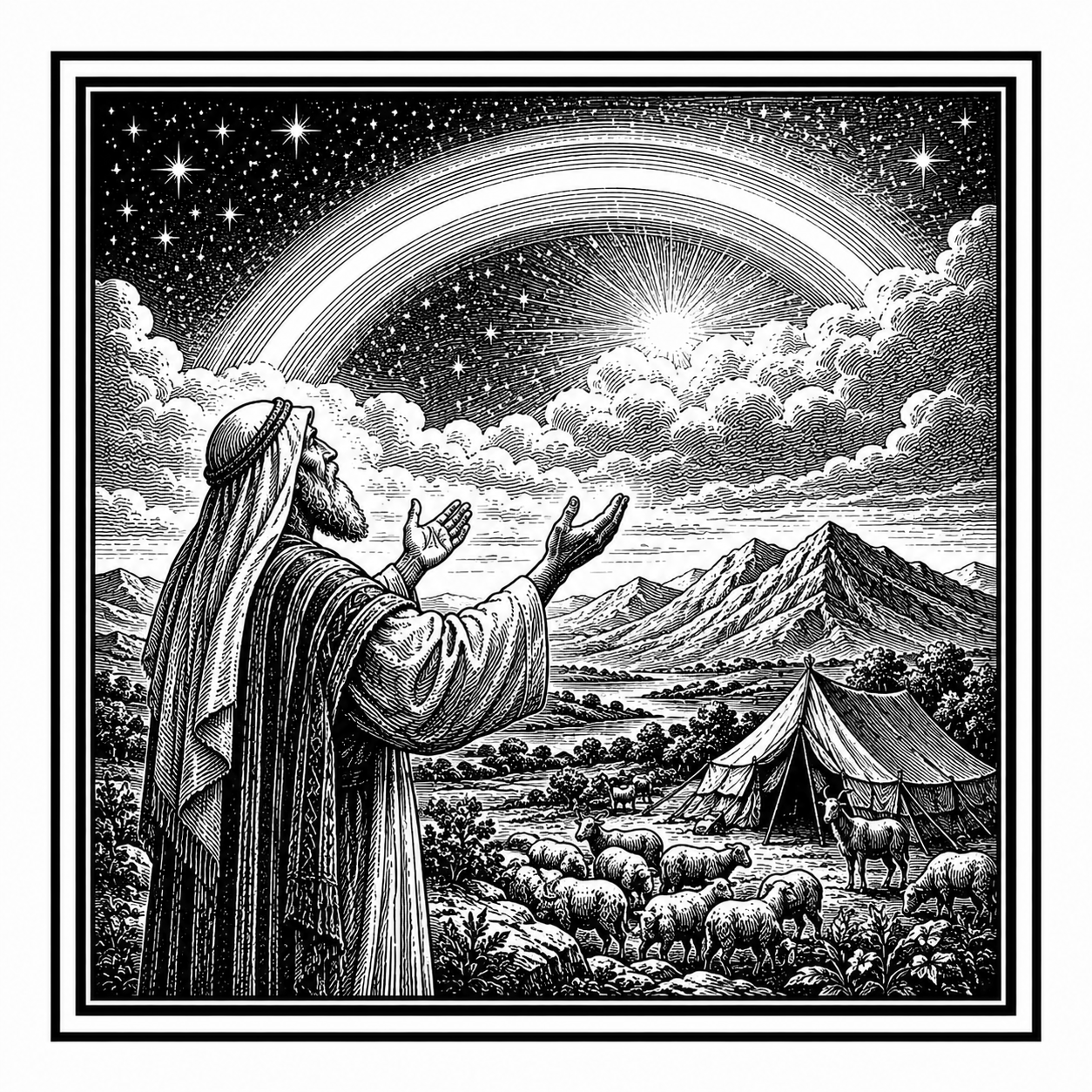
God’s saving plan begins to take clearer shape when he calls Abraham.
God promises Abraham that he will make him into a great nation and that through his offspring all the nations of the earth will be blessed. God’s choice of Israel is therefore never merely about one nation. Through Israel, God intends to bring his promised Savior into the world.
When Abraham’s descendants become slaves in Egypt, God hears their cries and rescues them. Through Moses he delivers them from slavery, brings them through the Red Sea, and gathers them to himself at Mount Sinai.
Only after rescuing them does God give them his Law.
This order matters.
Israel does not obey God’s Law in order to become God’s people. God first saves them and makes them his people. Then he teaches them how his redeemed people are to live.
The Law reveals God’s good will. It restrains evil, guides God’s people in lives of love, and—most importantly—exposes the depth of human sin and our need for mercy.
Through Israel’s sacrifices, priesthood, tabernacle, temple, and worship, God also begins teaching his people about holiness, sin, sacrifice, forgiveness, and reconciliation.
These things point beyond themselves toward the greater salvation God will one day provide.
But Israel shares the same fallen human nature as the rest of humanity.
Again and again, the people turn away from God. They worship idols, mistreat their neighbors, trust political power, and ignore God’s Word. God sends prophets calling them to repentance, but Israel repeatedly breaks the covenant.
Eventually Jerusalem is destroyed, the temple is devastated, and God’s people are carried into exile.
It appears that Israel’s mission has failed.
But God’s promise has not failed.
Through the prophets, God promises a new covenant, a new exodus, forgiveness of sins, the gift of his Spirit, and the restoration of his people. He promises a righteous King from the family of David who will shepherd God’s people and establish God’s reign.
This promised King is the Messiah.
Israel cannot rescue itself. Humanity cannot rescue itself.
So the Old Testament story ends with God’s people waiting.
Waiting for God to keep his promise. Waiting for forgiveness. Waiting for God’s kingdom. Waiting for the Messiah.
Read and reflect
Read in your Bible: Genesis 12:1–3; Exodus 20:1–2; Isaiah 53:4–6; Jeremiah 31:31–34.
Why does it matter that God rescued Israel before giving his Law?
ACT 4 OF 6
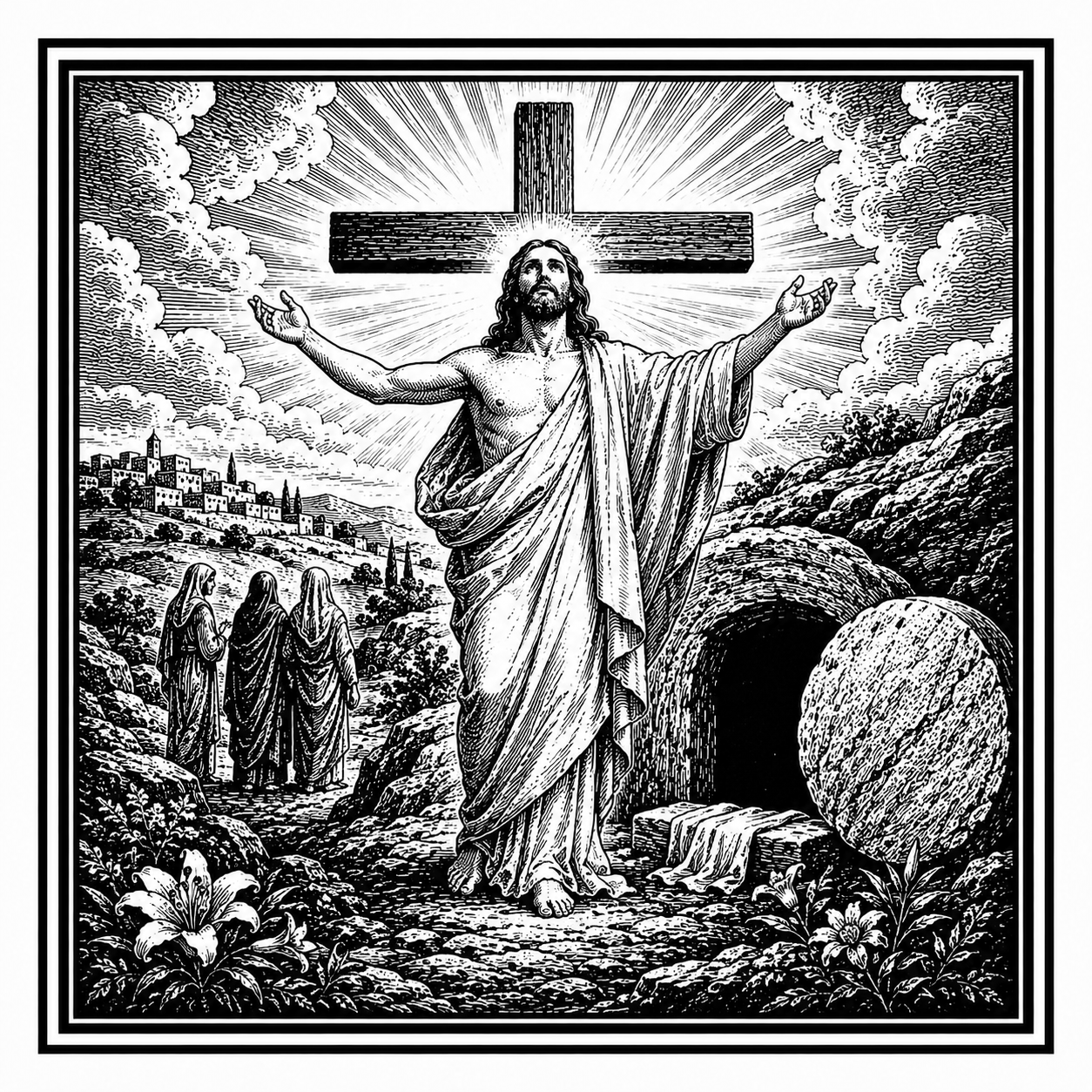
The Saving Victory of Jesus
Into this story comes Jesus of Nazareth.
He is not simply another prophet or religious teacher. He is the eternal Son of God who has taken our humanity into himself. In Jesus, God has come personally to rescue his fallen creation.
Jesus announces the good news: the kingdom of God has come near.
Where Jesus goes, signs of God’s restoring reign appear. The sick are healed. Demons are driven out. Sinners are forgiven. The rejected are welcomed. The dead are raised.
Jesus does what Israel—and Adam before Israel—failed to do. He trusts his Father perfectly. He fulfills God’s Law completely. He loves God and neighbor without sin.
He is the faithful Israelite and the new Adam.
Yet Jesus’ mission reaches its climax in what appears to be defeat.
During Passover, Jesus is arrested, condemned, and crucified under the Roman governor Pontius Pilate.
But the cross is not an accident.
Jesus willingly gives himself for us.
The innocent one takes the place of the guilty.
The sinless Son of God bears the sins of sinners. The judgment that should fall upon us falls upon him.
As Isaiah had promised, the Servant of the Lord is wounded for our transgressions. As John the Baptist declared, Jesus is the Lamb of God who takes away the sin of the world.
At the cross, God’s justice and God’s mercy meet.
Jesus does not merely show us how much God loves us. He actually accomplishes our salvation.
He bears our sin. He suffers our judgment. He pays the price of our redemption. He reconciles sinners to God.
And when Jesus cries, “It is finished,” the saving work entrusted to him has truly been accomplished.
Then, on the third day, God raises Jesus bodily from the dead.
The resurrection is God’s declaration that Jesus is Lord and that his saving work has succeeded. Sin has been atoned for. Satan has been defeated. Death itself has been broken open.
Jesus’ resurrection is also the beginning of the new creation.
Adam brought sin and death into the human family. Christ brings righteousness and life.
The old creation remains under the curse for now, but God’s new creation has already begun in the risen Jesus.
The decisive victory has been won.
Read and reflect
Read in your Bible: Mark 1:14–15; John 19:28–30; 1 Corinthians 15:3–8, 20–22.
What has Jesus accomplished for us that we could never accomplish for ourselves?
ACT 5 OF 6
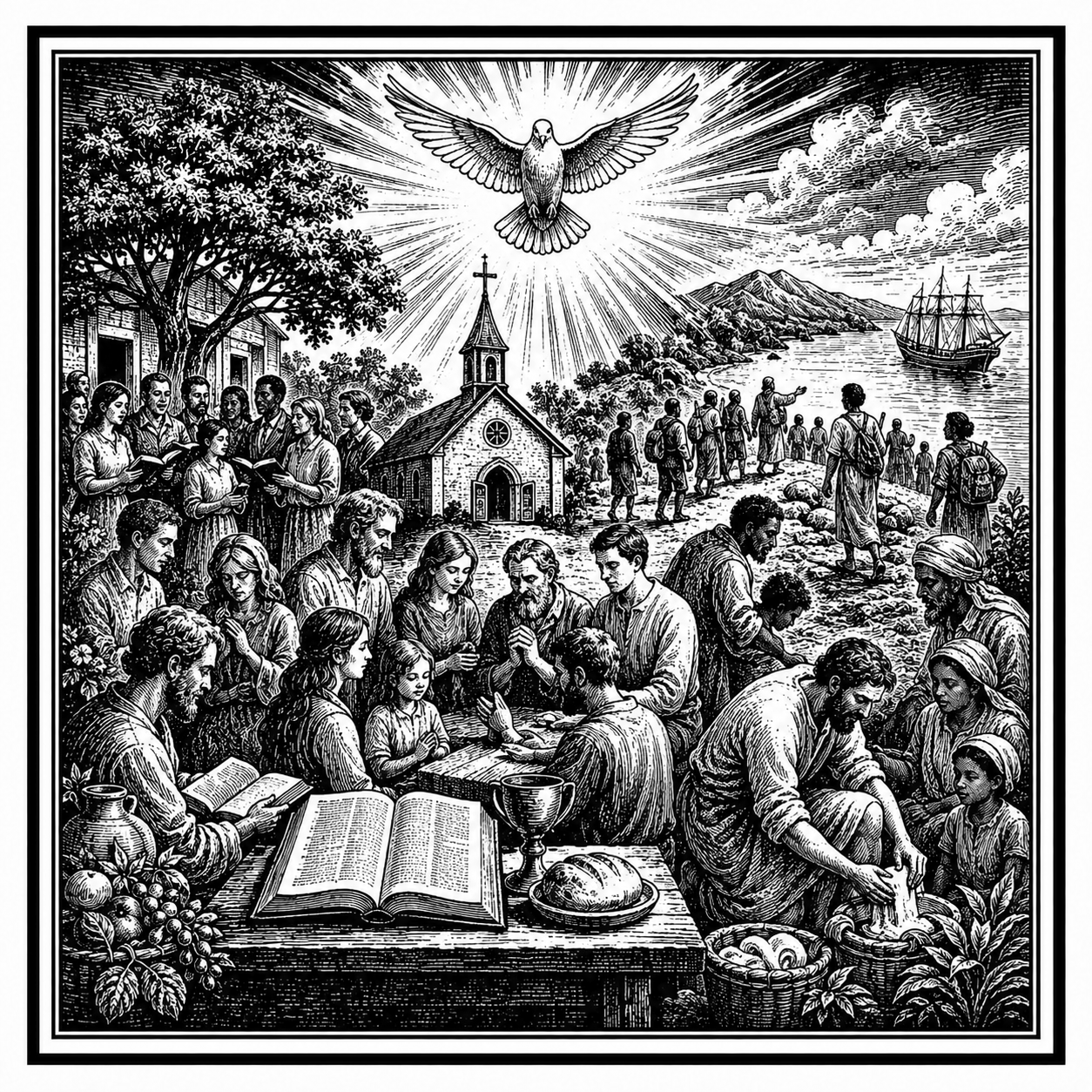
Christ Gathers His Church
After his resurrection, Jesus sends his disciples into the world with the Good News of what God has done.
This is the age in which we now live.
The risen Christ gathers a people for himself from every tribe, nation, language, and people. This community is the Church.
The Church is not first of all a human organization made up of people who have decided to follow Jesus. It is God’s creation.
The Holy Spirit calls people through the Gospel, enlightens them with his gifts, sanctifies them, and keeps them in the true faith.
God creates faith through his means of grace.
Through the preaching of the Gospel, God announces forgiveness to sinners.
Through Holy Baptism, God joins us to the death and resurrection of Christ, washes away sin, gives the Holy Spirit, and makes us his children.
Through Holy Communion, Christ gives his true body and blood with the bread and wine for the forgiveness of sins and the strengthening of faith.
Through these gifts, Christ continues coming to his people.
The heart of the Church’s message is therefore not what we must do for God but what God has done for us in Christ.
We are justified—declared righteous before God—not because of our works, religious achievements, or moral improvement, but entirely because of Christ.
This salvation is God’s gift.
By grace alone. Through faith alone. Because of Christ alone.
Faith simply receives what Christ has already accomplished.
The Church is also the body of Christ. Every believer belongs to Christ and, therefore, belongs to one another. The Holy Spirit gives different gifts to his people so that they may serve, encourage, strengthen, and care for one another in a community shaped by the love of Jesus. No Christian is meant to live the life of faith alone.
In this way, the Church is also like an embassy of heaven in the world. Christ is our Lord and King, and his Church is called to represent him on earth—to speak his Gospel, embody his mercy, and give the world a living glimpse of the life of his coming kingdom.
Those who have received God’s mercy are then sent back into God’s world to love and serve their neighbors.
Christians do not earn salvation through good works. Because salvation has already been given freely, Christians are set free to serve others through their everyday vocations—as parents and children, husbands and wives, workers and neighbors, citizens and members of Christ’s Church.
The Church also carries Christ’s Gospel into the world.
Jesus sends his disciples to make disciples of all nations by baptizing and teaching. So the Church proclaims repentance and forgiveness of sins in Christ’s name to the ends of the earth.
Until Christ returns, the Church lives under the cross.
Christians remain both saints and sinners. The Church itself experiences weakness, division, persecution, and failure. Yet Christ remains faithful to his promise.
He continues to gather, forgive, feed, strengthen, and preserve his people through his Word and Sacraments.
And through this often weak and unimpressive community, God continues announcing the greatest news the world can hear:
Christ has died. Christ is risen. Christ will come again.
Read and reflect
Read in your Bible: Matthew 28:18–20; Romans 6:3–5; 1 Corinthians 11:23–26; Ephesians 2:8–10.
How does Christ give his gifts to his Church, and how does receiving them lead us to serve our neighbors?
ACT 6 OF 6
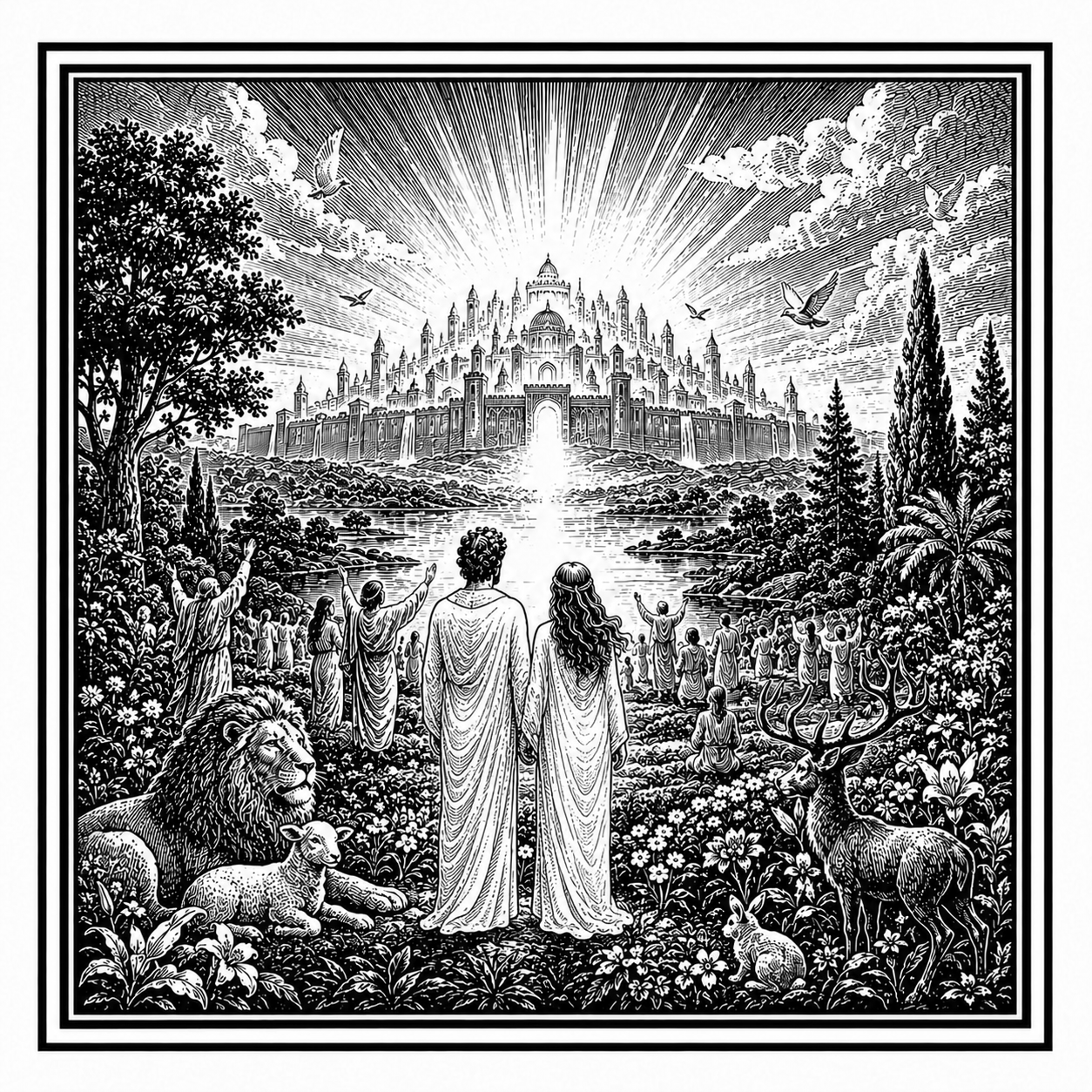
Christ Makes All Things New
The resurrection of Jesus guarantees that the biblical story is moving toward a real conclusion.
We live between Christ’s resurrection and his return.
The kingdom of God has already come in Christ, but it has not yet appeared in its fullness. Sin has been defeated, yet we still struggle against it. Death has been conquered, yet people still die. Christ reigns, yet much of the world still rebels against his rule.
Scripture therefore teaches the Church to wait in hope.
One day, the risen Jesus will appear openly in glory.
There will not be another Savior and there will not be another plan of salvation. The same Jesus who was crucified, raised, and ascended will return.
The dead will be raised. Christ will judge the living and the dead. Those who reject Christ will enter eternal death in hell. Those who belong to Christ will enter the fullness of the life he has already won for them.
Then the consequences of the Fall will finally be undone.
Creation itself, which has been subjected to frustration and decay because of human sin, will be set free from its bondage.
Death will be destroyed. Suffering will end. Tears will be wiped away. Satan and every power opposed to God will be gone forever.
God will bring about the new heavens and the new earth, the home of righteousness.
Our Christian hope is therefore not that human souls will escape creation forever. Our hope is to be with Christ, first in death, and then, on the Last Day, in the resurrection of the body and the life of the world to come within God’s heavenly presence.
We will be raised in glory, transformed into the likeness of Christ, and completely freed from sin and death.
Everything Adam lost will be restored—and surpassed—in Christ.
Humanity will finally become what God intended humanity to be: his redeemed, glorified, image-bearing children, living forever in loving communion with the Father, Son, and Holy Spirit.
And God’s creation itself will share in the glorious freedom of the children of God. Heaven and earth will be joined together.
At the center of the new creation will be God himself.
The Bible begins with God dwelling with humanity, and it ends with that fellowship fully and permanently restored.
God’s heavenly dwelling is with mankind.
There will be no barrier between God and his people. No sin separating us from him. No death threatening his gifts. No exile from his presence.
We will see him. We will worship him. We will live in his love.
The Lamb who was slain will reign forever, and his redeemed people will share in his life and glory.
The story that began with creation will end with new creation.
The promise given after humanity’s fall will have been completely fulfilled. The Savior promised to Abraham and Israel will have finished his work. The Church gathered by the Gospel will become the Church in glory.
And the Triune God will be all in all.
That is the drama of the Bible:
Creation. Fall. Promise. Christ. Church. New Creation.
And at the center of the entire story is Jesus Christ—the crucified and risen Lord who comes to sinners in grace and who will one day make all things new.
Read and reflect
Read in your Bible: Romans 8:18–25; 1 Corinthians 15:20–28; Revelation 21:1–5; Revelation 22:1–5.
How is the hope of bodily resurrection and new creation different from simply escaping this world?
PRAY GOD’S PROMISES
A prayer of praise and hope
Lord God, Father, Son, and Holy Spirit, we praise you for the great story of your saving love. You created us for fellowship with you, promised redemption when we fell, fulfilled your promises in Jesus Christ, and gathered us into his Church by the Gospel. Keep us faithful as we wait in hope for our risen Lord to return, raise the dead, restore your creation, and bring your people into the fullness of your glory. Through Jesus Christ, our Lord. Amen.